Why Nail Gel Chemistry Is on a US Safety Agenda
A US panel's October packet revisits nail-gel photoinitiators. What they do, how salon and at-home use differ, and what under review means.
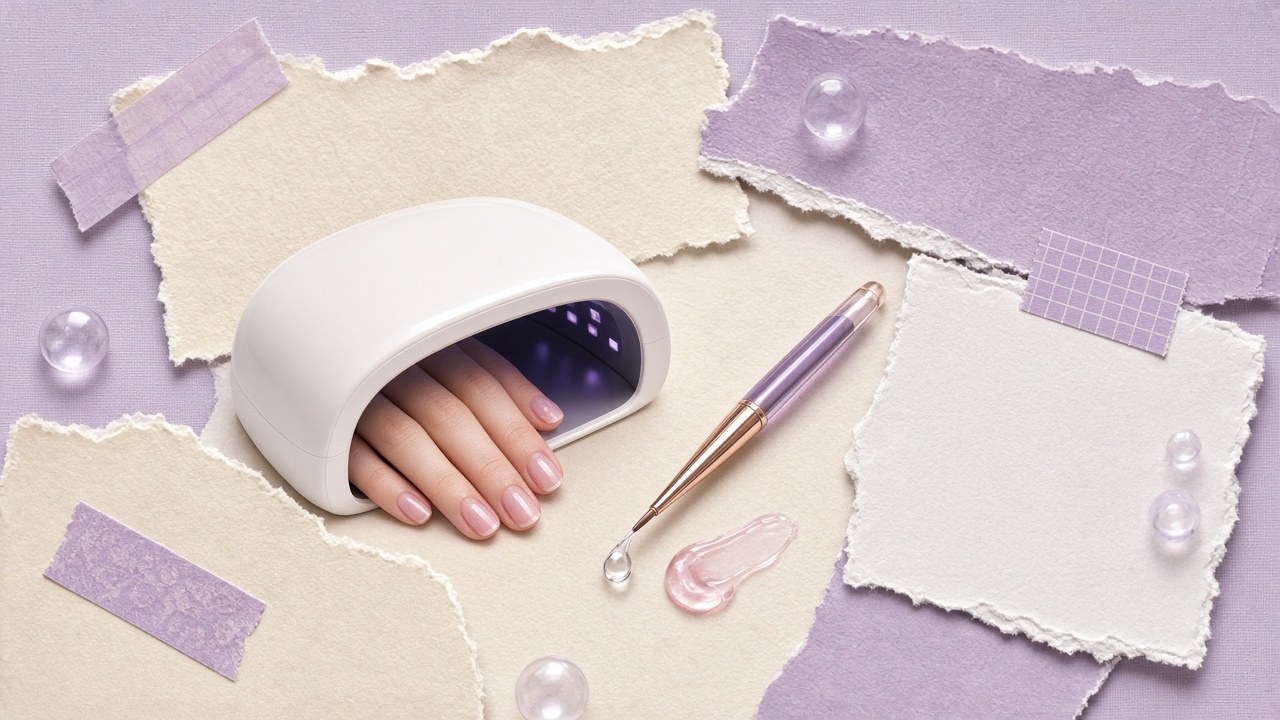
Gel manicures look simple from the chair: brush, lamp, hard shine. Under the INCI list, a small class of phosphine-oxide photoinitiators is doing the chemical work. When ultraviolet or LED light hits them, they break apart into radicals that start the polymer network that makes a gel coat set.
On 11 September 2026 the Cosmetic Ingredient Review released a Draft Tentative Report on three of those ingredients for the Expert Panel meeting on 5-6 October. The packet is not a finished US "safe as used" stamp, and it is not a recall notice. It is the next step in an unfinished review that has already asked for more data twice [1] [2] [3].
The three names on the October docket
CIR is reviewing them as a group of acylphosphine oxide and phosphinate photoinitiators [1]:
- Trimethylbenzoyl Diphenylphosphine Oxide (TPO)
- Ethyl Trimethylbenzoyl Phenylphosphinate (TPO-L)
- Bis-Trimethylbenzoyl Phenylphosphine Oxide (BAPO)
Dictionary functions summarised in the draft call the first an artificial nail builder and the other two light stabilisers. In practice, formulators use them because they absorb in the UV and near-visible range that nail lamps emit and then kick off curing [1].
Council survey figures summarised for the Panel put TPO at up to 5% in nail polish and enamel categories, and TPO-L at up to 6.2% in similar nail products. Frequency-of-use tables in the broader review history show that the large majority of reported listings sit in manicuring preparations, with smaller counts in other product types that the Panel has repeatedly asked to understand better [1] [2].
What a photoinitiator is, in plain English
Nail gels are built from reactive monomers and oligomers. Left alone in the bottle, they stay workable. Under the lamp, a photoinitiator absorbs photons, cleaves, and creates radicals that stitch those building blocks into a hard film.
TPO-type ingredients are Type I (alpha-cleavage) photoinitiators. CIR's chemistry section describes rapid cleavage into radical fragments that start polymerisation without needing a separate co-initiator. Once curing goes as intended, little free photoinitiator is expected to remain; residual traces, if any, would sit inside the hardened coat [1]. That ideal case is why nail-plate use and periungual skin contact are discussed as different exposure stories.
Salon habits versus at-home kits
Professional application usually means trained brush control, defined lamp times, and products chosen for a salon workflow. At-home kits put the same chemical class into less controlled hands: thicker coats, incomplete cure, and more accidental contact with cuticle skin are ordinary risks of DIY technique rather than exotic toxicology.
CIR's meeting history, reproduced in the October packet transcripts, keeps returning to that distinction. Panel members have discussed whether nail-plate use can be evaluated separately from reported non-nail listings, and whether consumer self-application changes how much uncured material touches living skin [1]. The draft does not lecture hobbyists. It does keep asking for irritation, sensitisation and phototoxicity data at relevant skin exposures, because spilled gel is not a theoretical problem for anyone who has painted their own nails.
If you use gel at home, the practical habits that match how these chemistries work are dull on purpose: thin coats, full cure times for your lamp, keep wet product off surrounding skin, and stop if dermatitis appears around the nail folds or on eyelids and face where allergen transfer sometimes shows first.
What "under review" means at CIR right now
This file has moved through several stages. An SLR on TPO posted in November 2024. A March 2025 Draft Report produced a first Insufficient Data Announcement. In June 2025 the Read-Across Working Group added the two related phosphine oxide and phosphinate ingredients. A March 2026 Draft Tentative Report led to a second IDA. The September 2026 packet is again a Draft Tentative Report, with new unpublished systemic-exposure and skin-sensitisation risk-assessment material for the two added ingredients as used in UV/LED-curable nail products [1] [2].
The Admin memo for October asks the Panel to discuss the data, including remaining gaps, and to be prepared to issue a Tentative Report with a safe, safe-with-qualifications, insufficient-data, unsafe, or split conclusion [2]. That menu is process language. It is not a prediction of which box will be ticked.
Data needs carried from the March 2026 IDA, as restated in the September cover memo, still include sensitisation data at maximum use concentrations, phototoxicity and photosensitisation data outside nail-product assumptions, concentrations of use in non-nail products, manufacturing and impurities detail for the two newer ingredients, and dermal irritation at maximum use for TPO. Some risk-assessment work arrived after that IDA; several experimental requests remain marked as not received in the packet tables [1] [2].
How Europe's record fits without hijacking the US story
European scientific and legal history is part of why nail photoinitiators stay on safety agendas, but it is a separate jurisdiction from CIR.
In 2014 the Scientific Committee on Consumer Safety concluded that TPO was safe in nail-modelling products at up to 5%, while calling it a moderate skin sensitiser and declining to clear other cosmetic uses without more documentation [4]. More recently, Commission Regulation (EU) 2025/877 amended the EU cosmetics regulation in light of CMR classifications, including measures that place TPO among substances restricted from cosmetic use under that update [5]. CIR's own March 2026 discussion transcripts, included in the October PDF, note the EU reproductive-toxicity classification context for TPO while the US Panel continues its independent weight-of-evidence review [1].
For a North American enthusiast, that means two true sentences at once. Europe has already taken a hard regulatory turn on TPO in cosmetics. The US Expert Panel is still mid-process on a three-ingredient tentative assessment and has not, in this September draft, published a final CIR conclusion [1] [5].
What this is not
It is not evidence that every gel manicure is reckless. It is not an instruction to abandon salon hygiene or lamp curing. It is not a verdict on every acrylate or methacrylate elsewhere in a gel formula. Those are different ingredients with their own allergy stories.
The calm reading is narrower. A widely used curing aid is getting a full cosmetic-ingredient work-up in the United States, after years of EU scientific opinions and a later EU legal change. Shoppers who want signal rather than noise can watch whether October's Tentative Report splits nail from non-nail uses, restates data gaps, or moves toward a qualified conclusion once the Panel votes [2].
FAQ
Are photoinitiators the same as the gel "base" resins?
No. Resins and monomers build the film. Photoinitiators are the spark that starts curing under the lamp. Labels may list TPO or related phosphine oxide names among several reactive ingredients [1].
Has the US Panel banned TPO?
Not in this packet. The September document is a Draft Tentative Report heading into the 5-6 October 2026 meeting. Final CIR language comes only after the Panel issues and later finalises a report [1] [2].
Why do at-home kits keep coming up?
Because reported uses and Panel discussion treat accidental skin contact and incomplete cure as realistic for consumer application. That is an exposure question, not a moral judgment on DIY beauty [1].
Should I switch products before October?
Use whatever manicure system you already tolerate, keep wet gel off skin, and follow lamp instructions. If you have a history of acrylate or nail-product dermatitis, see a clinician rather than reading meeting agendas as product instructions [1] [4].
Bottom line
Phosphine-oxide photoinitiators are why many UV and LED gels harden in minutes. CIR's 11 September 2026 Draft Tentative Report puts TPO and two related ingredients back on the October agenda with new risk-assessment submissions and unresolved data requests, while Europe has already moved TPO into a stricter cosmetics posture [1] [2] [5]. The Index entries for TPO, TPO-L and BAPO are linked above; treat "under review" as an unfinished US safety process rather than a scare headline.
Sources · 5
- [1]Cosmetic Ingredient Review. Safety Assessment of Bis-Trimethylbenzoyl Phenylphosphine Oxide, Ethyl Trimethylbenzoyl Phenylphosphinate, and Trimethylbenzoyl Diphenylphosphine Oxide as Used in Cosmetics - Draft Tentative Report for Panel Review. CIR. Release date 11 Sep 2026; Panel meeting 5-6 Oct 2026
- [2]Heldreth B. Expert Panel Meeting October 5-6, 2026 - Admin Main (agenda and memorandum). CIR. 11 Sep 2026
- [3]Cosmetic Ingredient Review. 177th Expert Panel Meeting
- [4]Scientific Committee on Consumer Safety (SCCS). Opinion on Trimethylbenzoyl diphenylphosphine oxide (TPO), SCCS/1528/14. Adopted 27 Mar 2014
- [5]European Commission. Commission Regulation (EU) 2025/877 of 12 May 2025 amending Regulation (EC) No 1223/2009 as regards certain CMR substances