Why a US Safety Panel Is Asking Hard Questions About Propolis in Skincare
Bee resin shows up in soothing creams and “repair” serums, but a new Cosmetic Ingredient Review memo says the hard part is matching the science to the exact ingredients on the label. The panel meets in early October to decide how to proceed.
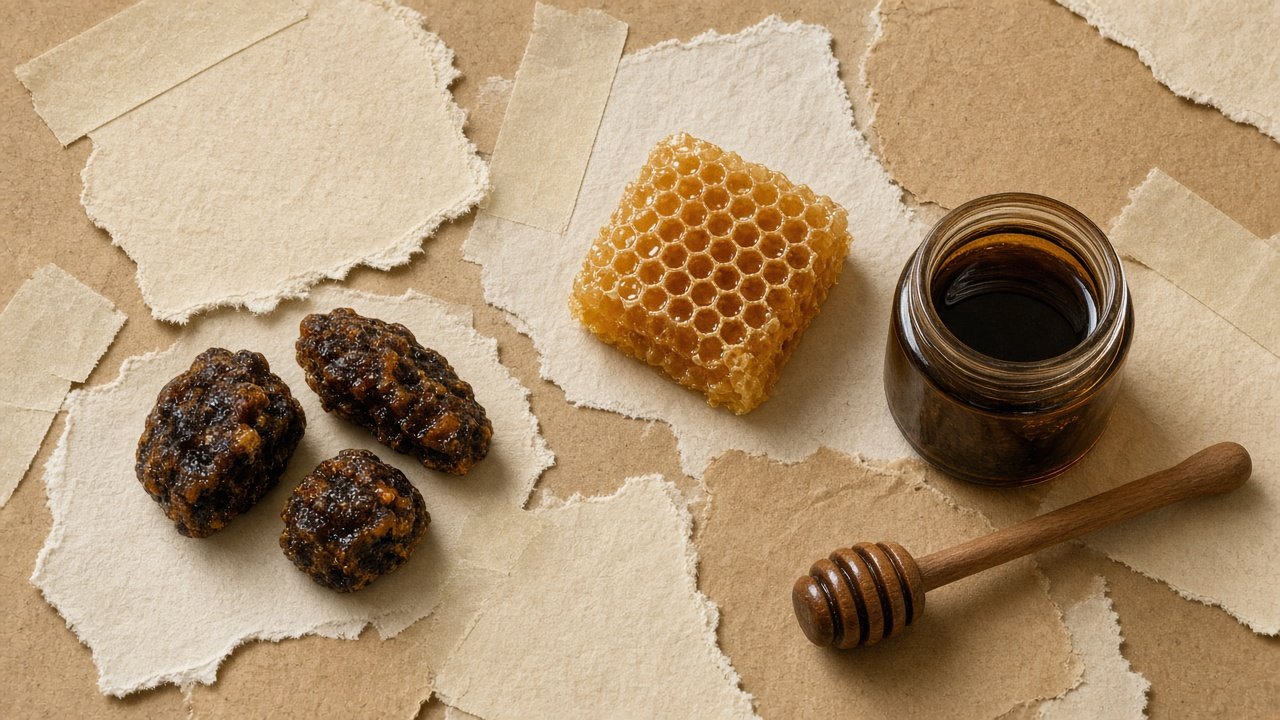
Propolis has a friendly reputation in skincare. It sounds like honey’s tougher cousin: hive resin, folk history, soothing claims on balms and barrier creams. Regulators and safety panels, though, have to ask a colder question. When a study says “propolis,” is that the same material as the INCI name on your bottle.
On 11 September 2026 the Cosmetic Ingredient Review circulated a strategy memo on propolis-derived ingredients for its 5-6 October Expert Panel meeting. Staff are preparing a Scientific Literature Review, but they have paused to ask the Panel how to sort a crowded evidence pile before they lean on it [1].
Four names, overlapping labels
The memo’s Table 1 lists four cosmetic ingredients under review:
- propolis Wax (Propolis Wax), with Propolis Cera described as the EU trivial name for the same material
- propolis Extract (Propolis Extract), defined as the extract of Propolis Wax
- hydrolyzed Propolis Extract (Hydrolyzed Propolis Extract), a hydrolysate of the extract
PCPC told CIR that Propolis Cera and Propolis Wax represent the same material, so the assessment will treat them as synonyms. The harder problem is how those dictionary definitions relate to materials simply called “propolis” in journals, and how Wax/Cera relates to Extract when they share the same CAS number and even share “propolis (EP)” as a technical name in places [1].
If you have ever wondered why two “propolis” serums feel unrelated, this is the structural reason. The word on the marketing line is broad; the INCI line is trying to be specific; the literature often sits somewhere in between.
Bees do not farm a single plant
CIR stresses a point botanicals sometimes dodge. Propolis is not harvested from one named plant the way green tea or centella is. Bees gather resins from local flora. Plant source, geography, season and bee species all change the chemistry [1].
The memo’s examples are concrete. Poplar-type propolis common in Europe, North America and non-tropical Asia is tied mainly to Populus species. Brazilian green propolis is tied mainly to Baccharis dracunculifolia. Profiles can also differ between Apis mellifera and various stingless bees [1].
That variability is not trivia. It decides whether a safety paper about one regional propolis helps, hurts or simply does not apply to the cosmetic grade in a Canadian or US formula.
Why sensitisation data made staff slow down
The memo walks through patch-test evidence as a cautionary illustration, not as a final verdict on every cream. Positive reactions to a commercial propolis patch-test material rose from 2.8% in 2020 to 16.4% in 2023 after the material changed from Chinese to Brazilian propolis. In a later concurrent series of 239 patients, 23.8% reacted to Brazilian propolis versus 3.8% to Chinese propolis, and chemical analysis showed large compositional differences between those test materials [1].
CIR’s reading is careful: source and composition may matter when you interpret safety data. Staff do not, in this memo, declare cosmetic propolis universally unsafe or safe. They say the mismatch risk is high enough that they want Panel guidance before vacuuming the literature into the SLR [1].
The three questions for October
Staff ask the Expert Panel:
- Is there already enough basis to decide which published propolis materials count for Propolis Wax/Cera and Propolis Extract, or do they need more composition, botanical/geographic source and manufacturing detail from industry. If that detail never arrives, should CIR issue a Notice to Proceed rather than build the SLR on ambiguous identity.
- How far can data be read across among characterised types (Brazilian green, Brazilian red, poplar-type, and so on). Pool everything, or demand source similarity.
- What to do with papers that only say “propolis” or “propolis extract” with no further characterisation. Include only as supporting information, or exclude until relevance is clear [1].
Those are process questions. They are also the difference between an Index grade that can move from Emerging to something firmer, and a literature review that mixes unlike resins under one friendly word.
What this means if you like propolis products
You do not need to bin a balm tonight because of a strategy memo. Nothing in the document finalises a ban, a percentage cap or a “safe as used” line. It says the US panel’s staff want a clearer map before they argue about endpoints [1].
For enthusiasts, the practical habits are simple. Read the INCI for propolis Extract, propolis Wax or related names rather than the front-of-pack story. If you are patch-test reactive to propolis or to balsam of Peru-type fragrance markers, treat hive resins with the same caution you already use for other contact allergens. And watch the October meeting outcome: the next useful signal will be whether CIR demands better identity data, how it handles read-across, and only later what safety conclusion follows.
Bottom line
Propolis is popular, chemically noisy and easy to over-simplify. CIR’s 11 September 2026 strategy memo puts that noise on the record and asks the Expert Panel to decide how to read it before the full safety write-up proceeds [1]. Until that review lands, the Index keeps these entries at Emerging and chips them as ingredients under active methodological scrutiny, not as settled actives.
Sources · 5
- [1]CIR Strategy Memo on Propolis-Derived Ingredients (2026)regulation
- [2]Kasote D, et al.. Propolis: Chemical diversity and challenges in quality control. Phytochemistry Reviews (2022)
- [3]de Groot A, Rustemeyer T. Contact allergy to propolis: Update 2013–2025. Dermatitis (2026)
- [4]Van Oers EM, et al.. Results of concurrent patch testing of Brazilian and Chinese propolis. Contact Dermatitis (2024)
- [5]Cherian P, et al.. Safety assessment of honey-derived ingredients as used in cosmetics. International Journal of Toxicology (2025)